



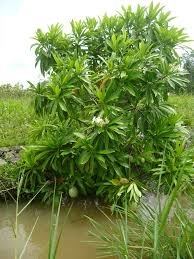
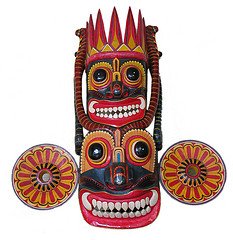
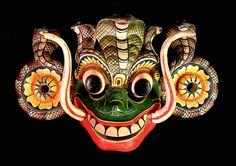
The traditional masks are carved from light Balsa like Kaduru wood (Strychnine tree, Strychnos nux-vomica, also known as poison nut, balsa and snakewood) The good Kaduru trees grow in the marshy lands bordering paddy fields.
The reason this wood is used is because of its durability as it doesn’t get attacked by wood mites.
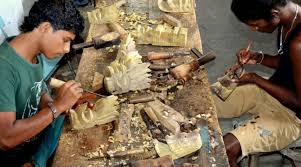
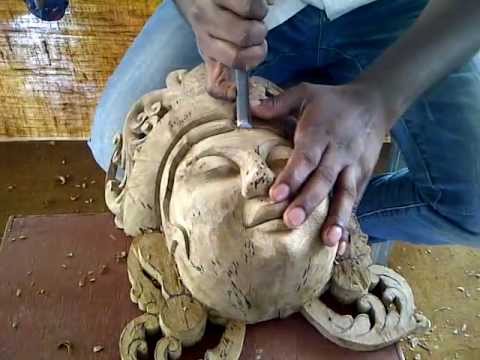
Kaduru wood is the most suitable for the production of masks, it is a source of the world’s lightest timber. The softness of the timber helps craftsmen to carves such a complex carving. Other than the talent, craftsmen should have the passions to make such a miracle with their chisels.
The wood is bought by the craftsmen from Gampaha, Ganemulla and Elpitiya. Since this timber is mostly obtained from the tree trunk, the parts of the mask like the ears which requires thin planks are made out of the Albizia (Ceylon Rosewood) which is a light wood.
The wood is smoke-dried for a week in preparation. The hand carved & hand painted masks in traditional dance dramas are vibrant & colourful.
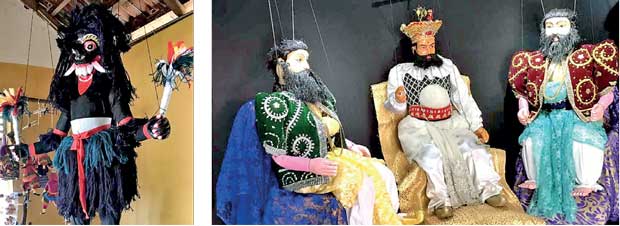
Puppet Play: There is a rich tradition of storytelling native to the town of Ambalangoda. Puppetry, although quite uncommon now, was once an important part of this. A few puppeteers from this region still engage in this imaginative and expressive art form. This experience gives you a satiating glimpse into this ancient form of theatre, which they preserve carefully. A small, rural industry once existed to support the making of puppets, the production of materials used in crafting them, and the design of sets to stage puppet plays. It is largely derelict now. Puppet play is presently restricted to shows concerning moral virtue and some folklore, staged a few times each year; put on usually as part of the festivities surrounding the Buddhist holiday of Vesak or during the full moon day (Poya) each month.
The relevance of puppetry, as a distinct type of entertainment and a leisure activity for the entire family, has waned considerably. Its currency in ritualistic and cultural tradition too has withered. The entire village — from its headman to those from the perceived lower classes of society — would gather around such performances. Some of the older puppeteers speak of this era with much nostalgic affection. But a mini resurgence has occurred through the preservation efforts of these artisans and performers as well as the patronage of, both, local and foreign enthusiasts. There is renewed interest in local puppets and puppet play as a performance art. Its symbolic significance has carried it through. And we let you be a part of its revival through this distinct, alternate experience! An enthralling puppet show will be staged just for you. It can be combined with a meal or a leisurely drink or two, if sufficient prior notice is given.
Ambalangoda’s rich but partly-forgotten tradition of puppetry is to be revived and developed with the establishment of Sri Lanka’s first puppetry museum with funding support from the local bank soon.
Strengths
Inherited craftsmanship
Availability of variety of raw materials
Availability of talented designers.
Availability of Creative and innovative skills
Ability to produce unique , customized products
Traditional crafts villages
Potential to create more employment opportunities especially in the rural areas.
Govt. Support agencies like Export Development Board, National Design Center, National Craft Council, Laksala.
Ready access to technical assistance and business development services.
Weaknesses
Smallness of the enterprises
Lack of proper technology
Low productivity
Disorganized Raw material supply
Competition from too many similar enterprises producing similar products.
High cost in obtaining quality certifications
Lack of strategic focus for the sector
Limited access to credit.
Low participation of younger generation.
Opportunities
Traditional and modern skilled and trained handicraftsmen in all over the island.
Global and local market available for quality and handmade crafts
Government policy intervention for upgrading handicraft products in Sri Lanka and the high commitment of the Ministry and other Allied Institutes like National Design Center, Sri Lanka Handicrafts Board, Industrial Development Board.
Prevailing trend for locally made and Eco-friendly products.
Possibility of creating a network with other related institutions like IDB, SME Bank, EDB etc. • Availability of donor funds for the development of Handicrafts.
Threats
Free import of handicraft products from SAARC countries.
Lake of awareness of National Crafts Council‘s role and achievements among government and stakeholders.
Rapid change of technologies.
Free import of substitute products in the local market.
Soaring cost of raw material and scarcity
 Etsy Store:
  eBay Store:
 Etsy Store:
  eBay Store:
 Bonanza Booth: